Project overview
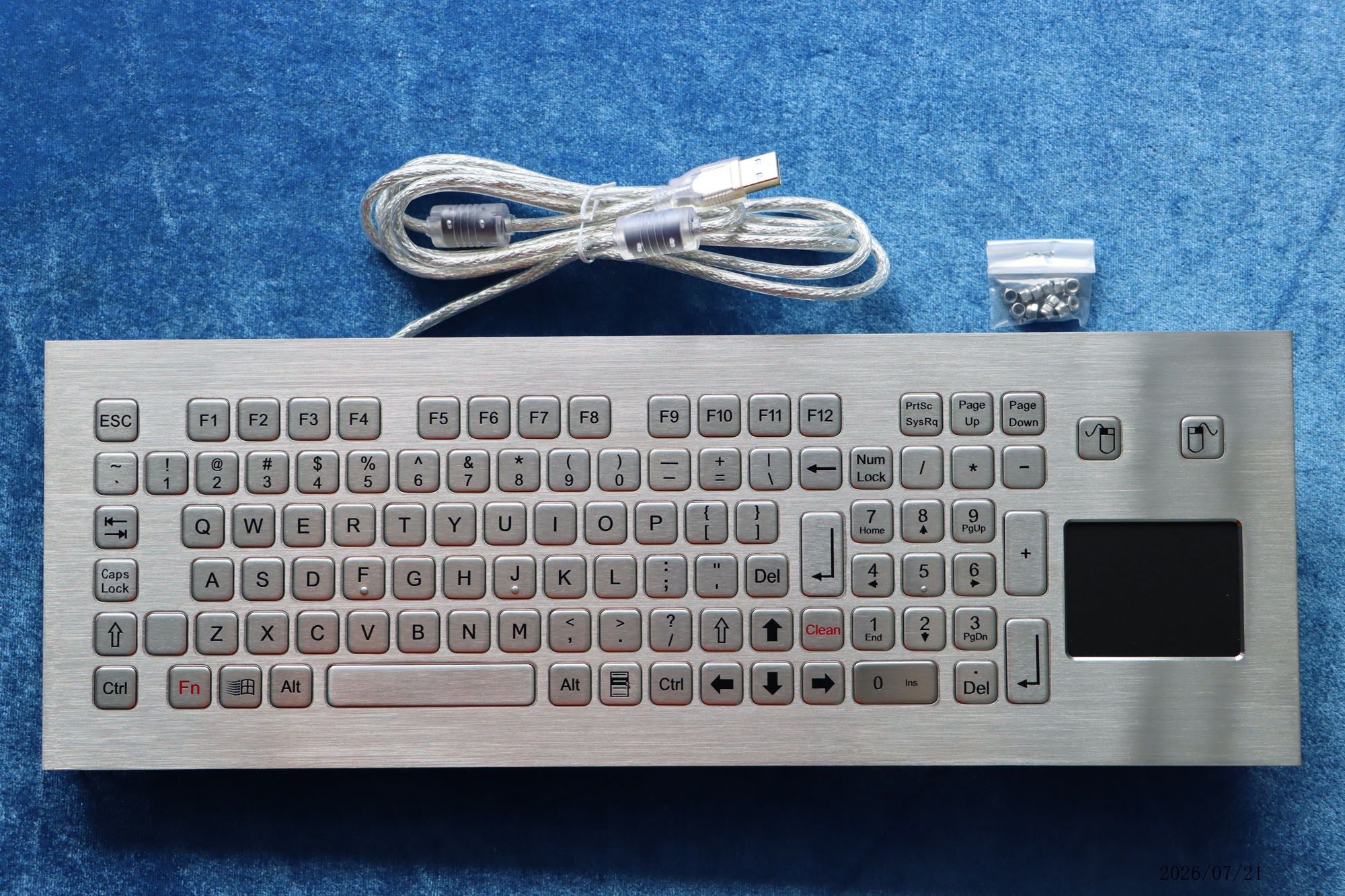
Newdesy supplied the K-TEK-B420TP-KP-FN-DWP stainless steel industrial keyboard to a US automation engineering partner for integration into demanding equipment. The project required an all-in-one input device that could combine a familiar full keyboard layout with cursor control while supporting a secure rear-mounted installation.
The finished configuration brings the keyboard, numeric section, function keys and touchpad together on one stainless steel front plate, reducing the need for a separate pointing device inside the operator panel.
Engineering configuration
- Full QWERTY layout with F1-F12 function keys
- Integrated numeric keypad for data entry and machine operation
- Built-in touchpad with dedicated left and right mouse buttons
- Stainless steel front plate and metal keys for intensive industrial use
- IP65 static protection on the rated exposed face
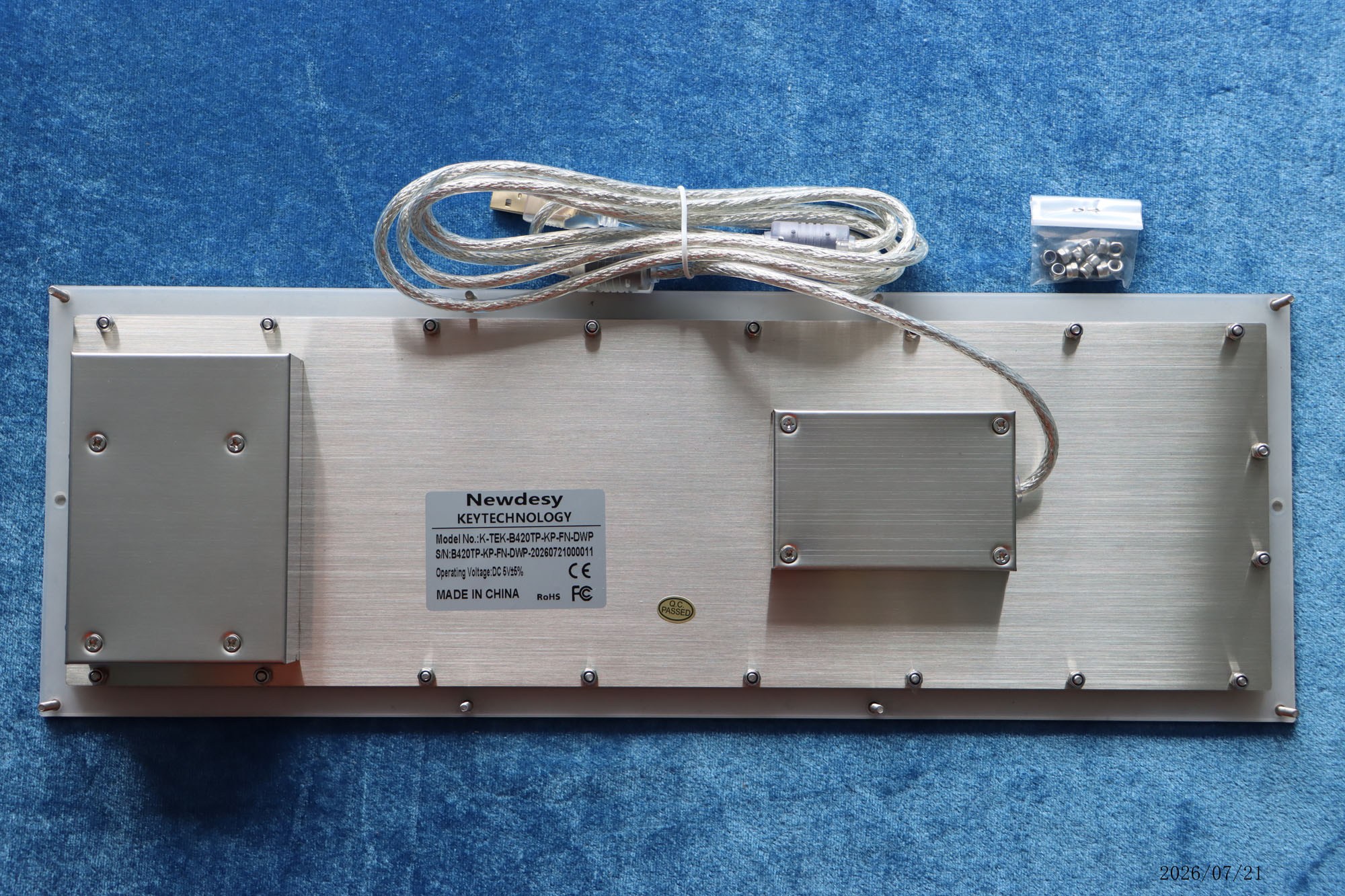
- Rear panel mounting with threaded studs and supplied mounting hardware
- USB cable fitted with two ferrite cores to help suppress electromagnetic interference
The rear-view photograph shows the practical integration details that are often missing from a standard product image: mounting studs around the perimeter, protected rear enclosures, cable exit position and the supplied hardware used to secure the assembly behind the customer's panel.
Protection for demanding equipment
The rated exposed face is designed to resist water splashes and dust when the keyboard is correctly mounted and sealed in the host panel. Its stainless steel construction also provides a robust interface for equipment exposed to frequent operation and incidental physical impact.
Project note: “Rugged” does not mean indestructible or suitable for submersion. The IP65 static rating applies to the specified exposed face. Protection of the completed machine depends on the panel cutout, gasket compression, enclosure design, cable routing and final installation.
Interference-conscious USB integration
The supplied USB cable uses two ferrite cores as part of the cable assembly. Ferrite components can help reduce conducted high-frequency interference in electrically noisy equipment, but final electromagnetic compatibility must be evaluated at complete-machine level because grounding, power quality, cable routing and nearby drives or motors also affect system performance.
For an OEM/ODM project, Newdesy can review required cable length, connector type, ferrite placement and internal routing before production.
Compliance documentation
The supplied configuration carries CE, FCC and RoHS compliance markings. Model-specific declarations, certificates or test reports can be provided for customer review after the exact configuration and applicable market requirements are confirmed.
If a project needs other standards or customer-specific testing, Newdesy can cooperate on feasibility, sample preparation and third-party certification planning. Certification scope, cost and schedule are evaluated for each project rather than assumed to apply to every configuration.
Suitable application directions
- CNC machinery and operator control stations
- Industrial automation panels and HMI consoles
- Outdoor or semi-outdoor self-service kiosks
- Process equipment requiring a washable metal input surface
- Public terminals where a separate mouse is impractical
Planning a similar installation
- Panel cutout, front-plate dimensions and available mounting depth
- Required keyboard layout, language and key legends
- Touchpad position and required pointing-device functions
- USB cable length, connector, shielding and ferrite requirements
- Expected exposure to water, dust, impact and cleaning chemicals
- Required compliance documents and destination market
- Prototype quantity, approval process and production schedule
Newdesy supports 1-PC prototypes, small-batch production and OEM/ODM engineering review. Share your panel drawing, operating environment and interface requirements so our team can recommend a suitable configuration.