Multi-industry adoption
The Newdesy K-TEK-A360KP-FN-DWP is one of our most frequently selected stainless steel keyboard platforms. Customers across industrial automation, energy control, oil and gas engineering and rugged-computer integration have chosen this model for panel-mounted HMI systems where dependable operator input and a durable metal interface are important.
To respect customer confidentiality, company names and project details are not disclosed. This case summarizes the shared engineering requirements behind these projects and explains why a common standard platform can serve several mission-critical industries.
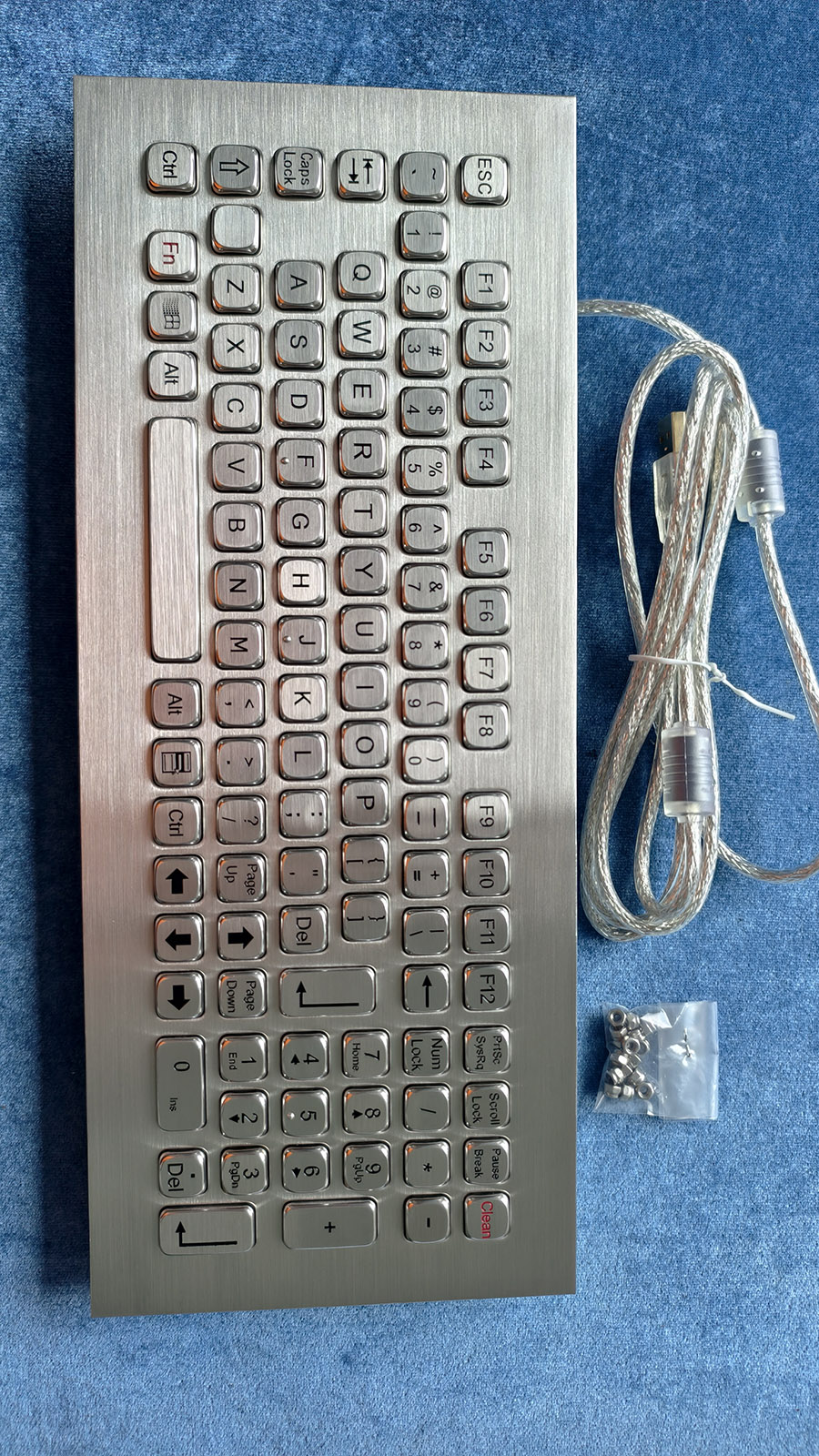
A full keyboard in a panel-mount format
The product combines the controls required for everyday machine operation in one stainless steel assembly:
- Full QWERTY layout for text and command entry
- F1-F12 function keys for configurable machine actions
- Integrated numeric keypad for process values and production data
- Dedicated navigation, editing and arrow keys
- A Clean key that can support a host-configured cleaning or key-lock workflow
- Stainless steel front plate and metal keycaps for intensive industrial use
- USB connection for straightforward host-system integration
This arrangement provides familiar keyboard functionality without relying on an office keyboard placed loose inside a control station.
Protection for demanding control environments
The rated exposed face provides IP65 static protection against dust and water jets when the keyboard is correctly mounted and sealed in the host panel. The stainless steel construction supports frequent operation and routine cleaning while providing a robust interface for industrial equipment.
Project note: IP65 applies to the specified exposed face. It does not make the complete machine suitable for submersion, unrestricted pressure washing or every oil and chemical. Final protection depends on the panel cutout, gasket compression, enclosure design, cable routing and installation quality. Chemical compatibility should be confirmed for the actual fluid, concentration, temperature and contact time.
Tactile input for gloved operation
The raised metal keys provide positive tactile feedback that can help operators confirm actuation in noisy or visually demanding work areas. The generous spacing and full key array also make this format practical where gloves are commonly worn.
Exact switch construction, operating force, travel and lifecycle are confirmed against the approved model specification for each order. Glove type and operator workflow should be validated with a production-representative sample before volume approval.
Rear mounting and cable integration
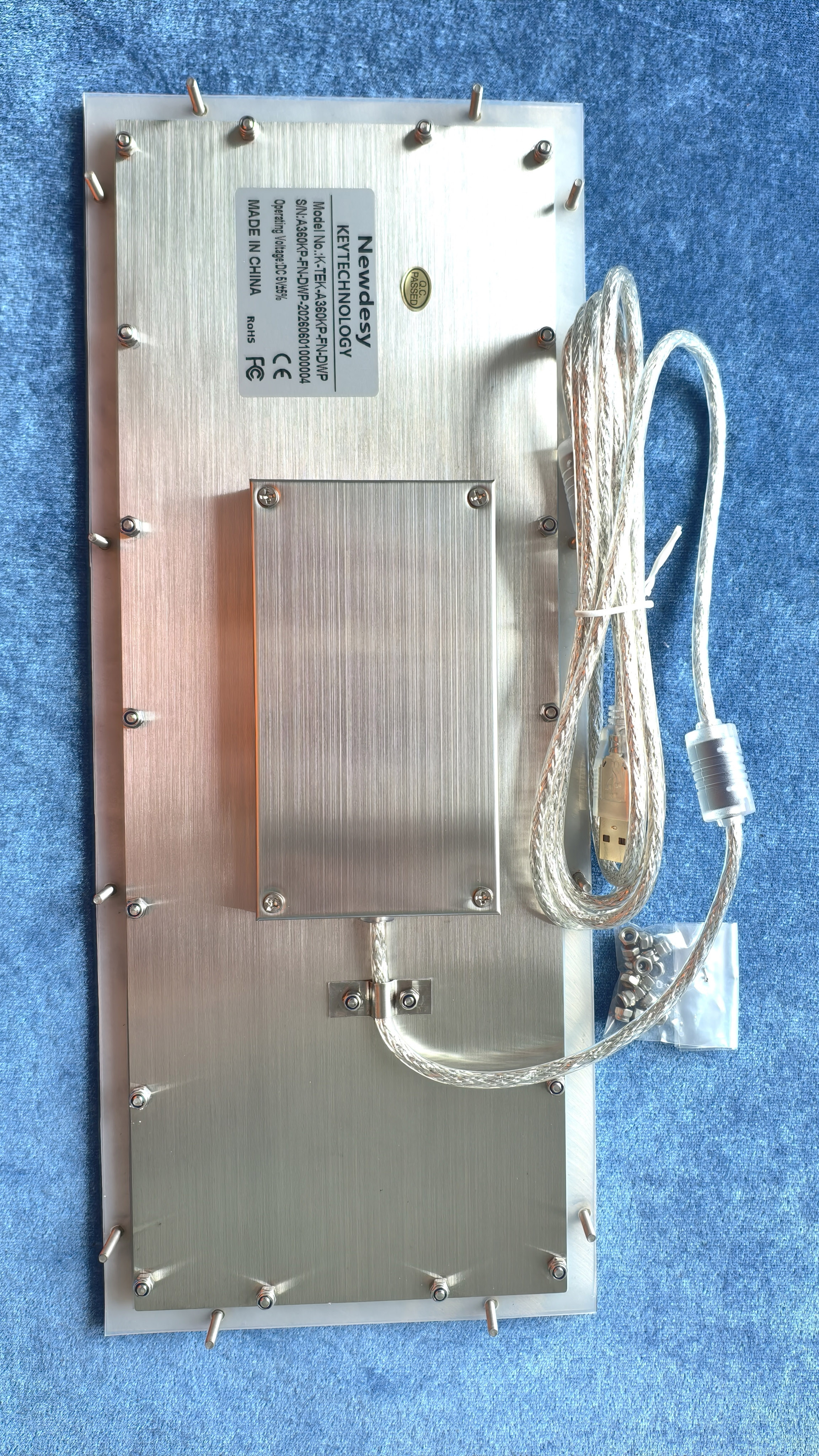
The rear photograph shows the installation features that matter to panel designers: threaded studs around the perimeter, a protected metal electronics enclosure, cable retention and a USB cable fitted with ferrite components. The keyboard is secured from behind the customer's panel, leaving an orderly stainless steel surface on the operator side.
Before production, the equipment designer should confirm the panel cutout, mounting depth, gasket compression, cable bend radius, grounding method, ferrite placement and service access. Electromagnetic compatibility must be evaluated at complete-machine level because grounding, power quality, cable routing and nearby motors or drives also affect system performance.
Application directions
- Industrial automation consoles and production machinery
- Energy monitoring and process-control stations
- Oil and gas engineering equipment
- Rugged PC and embedded-computer integration
- Marine, offshore and utility control panels
- Public or industrial terminals requiring a durable metal interface
Why a proven standard platform matters
Using an established keyboard platform can reduce project risk and shorten the path from evaluation to production. Customers can begin with the standard mechanical design, then review practical changes such as key legends, language, cable length, connector, branding, backlighting or mounting details.
Standard products and simple changes such as logo customization typically follow the normal production schedule. Highly customized projects require a separate engineering review, prototype-validation plan and project-specific lead time.
Planning a similar HMI project
- Panel drawing, cutout, mounting depth and enclosure material
- Required language, legends and programmable key functions
- Expected dust, water, oil, impact and cleaning exposure
- Glove type and required tactile response
- Interface, cable length, connector, shielding and grounding
- Required compliance documents and destination market
- Prototype quantity, validation plan and target schedule
Newdesy supports 1-PC prototypes, small-batch production and OEM/ODM development. Share your panel drawing, operating environment and interface requirements so our engineering team can review whether the K-TEK-A360KP-FN-DWP or another rugged input platform is the right fit for your project.